
On-Page SEO Optimisation: A Practical Guide
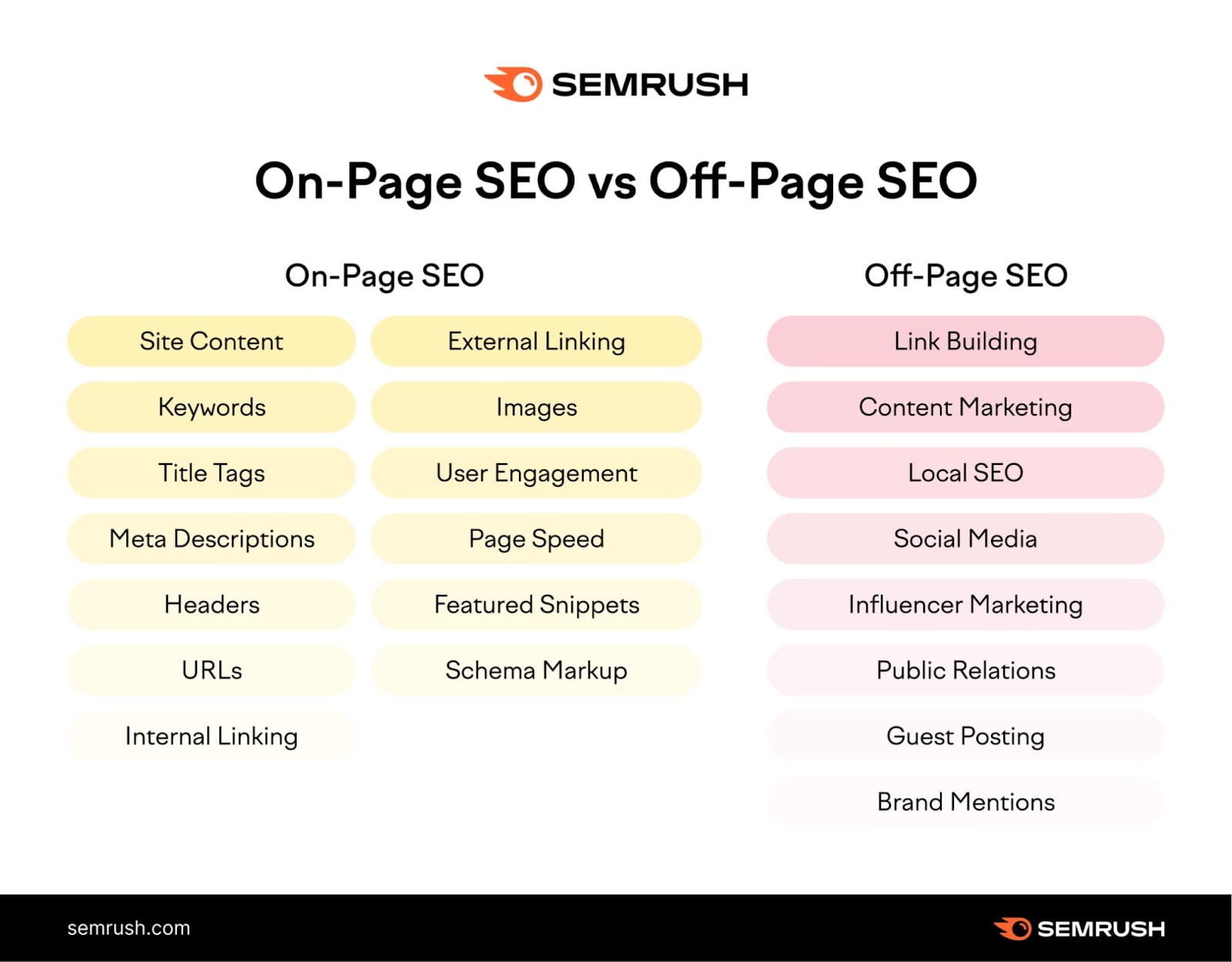
On-page SEO optimisation is the process of improving the elements of a webpage so that search engines can understand its content and people can use it easily. These elements include the page’s text, headings, title tag, images, links and technical set-up.
Good on-page SEO is about more than adding keywords. It means creating a useful, accessible page that matches what visitors are looking for and makes its subject clear. This guide explains the main steps involved.
Understand what the searcher needs
Before writing or updating a page, consider the reason someone would search for its topic. They may be looking for information, comparing options or ready to buy. Search results can offer clues: review the pages that rank for relevant queries and look at the format, topics and level of detail they provide.
Use this research to shape a page that answers the query thoroughly. Avoid copying competitors. Instead, identify what readers still need and provide clear, reliable information that adds genuine value.
Choose a primary topic and related terms
Each page should have a clear main topic. Choose a relevant target phrase, then consider the related words and questions people use when discussing that topic. These can help you cover the subject naturally and make the page easier to understand.
Use keywords where they make sense, including in the title, main heading and body copy. Do not force them into every paragraph. Repeated, unnatural phrasing can make content unpleasant to read and does not create a better page.
Write a clear title tag and meta description
The title tag is the page title that may appear as the clickable heading in search results and in browser tabs. Write a unique, descriptive title that reflects the page and gives people a reason to visit. Keep it concise enough to display clearly, and place the main topic naturally within it.
A meta description is a short summary that may appear beneath the title in search results. It is not a direct ranking factor, but a useful description can help searchers decide whether the page is relevant. Summarise the page accurately and avoid promises it does not fulfil.
Structure the content with headings
Headings help readers scan a page and understand how its sections relate to one another. Use one clear <h1> heading for the main subject, followed by logical <h2> and <h3> headings where needed.
Headings should describe the content that follows. Use them to organise the page, not simply to make text larger. A sensible structure also supports visitors using screen readers or navigating by headings.
Create useful, well-written content
Content is central to on-page SEO. Answer the main question early, then add the detail readers need to understand the topic or take the next step. Use straightforward language, short paragraphs and examples where they help.
Check facts, keep information up to date and make the source of important claims clear. Where suitable, show relevant experience or expertise. Avoid padding the page with repetitive text or writing to an arbitrary word count; the right length depends on the topic and the visitor’s needs.
Use descriptive URLs
A good URL is concise, readable and relevant to the page. For example, example.co.uk/on-page-seo/ is easier to interpret than a long URL made up of unclear numbers or parameters.
Use words separated by hyphens and avoid unnecessary changes to existing URLs. If a URL must change, set up a suitable redirect so visitors and search engines can find the new address.
Add relevant internal links
Internal links connect pages on the same website. They help visitors discover related information and help search engines find and understand the site’s content.
Link to useful, related pages using descriptive anchor text—the clickable words in a link. For instance, “read our guide to technical SEO” tells readers more than “click here”. Check that links work and avoid adding links that do not help the visitor.
Optimise images and other media
Images can make a page clearer and more engaging, but large files may slow it down. Resize and compress images appropriately, and use a suitable file format. Give image files descriptive names where practical.
Add alternative text (alt text) when an image conveys information. Describe its meaning in context rather than stuffing the text with keywords. Decorative images can generally use empty alt text so assistive technology can skip them. Captions or transcripts can also make video and audio content more accessible.
Make the page easy to use
Pages should work well on mobile devices, load promptly and be straightforward to navigate. Keep the layout readable, make links and buttons easy to use, and ensure that important content is not hidden behind intrusive elements.
Use a secure connection and check for issues such as broken links, missing images or text that is difficult to read. Good usability supports visitors and can help them complete the task they came to do.
Add structured data where appropriate
Structured data is a standardised way to describe information on a webpage to search engines. Depending on the content, it may be appropriate to mark up details such as products, events or business information.
Use only structured data that accurately reflects visible page content and follows the relevant guidelines. Correct markup can make a page eligible for enhanced search result features, but it does not guarantee that those features will appear.
Common on-page SEO mistakes
- Keyword stuffing: repeating phrases unnaturally instead of writing for people.
- Duplicate titles or content: making it harder to tell pages apart or understand their purpose.
- Vague headings: using headings that do not describe the section that follows.
- Neglected links: leaving broken links or using unclear anchor text.
- Unhelpful content: publishing pages that do not answer the visitor’s question.
- Ignoring mobile usability: creating a page that is difficult to read or use on a phone.
A simple on-page SEO checklist
- Confirm the page’s purpose and the search intent it serves.
- Choose a clear primary topic and use related terms naturally.
- Write a unique title tag and an accurate meta description.
- Use a logical heading structure.
- Provide useful, accurate and up-to-date content.
- Use a concise, descriptive URL.
- Add relevant internal links and descriptive anchor text.
- Optimise images and provide appropriate alt text.
- Check mobile usability, page speed and accessibility.
- Review performance and update the page when information changes.
Measure and improve
On-page SEO is not a one-off task. Monitor how pages perform using suitable analytics and search performance tools. Look at impressions, clicks, rankings and on-page engagement, while remembering that no single metric explains the whole picture.
If a page is not meeting its purpose, review whether it matches the search intent, provides a complete answer and is easy to use. Make changes based on evidence, then allow time to assess their effect.
Conclusion
Effective on-page SEO optimisation brings together relevant content, clear page structure and a positive user experience. By making each page useful to visitors and easy for search engines to interpret, you can build a stronger foundation for organic search visibility over time.
Eight Benefits of On-Page SEO Optimisation for Improved Search Performance
- Improves search visibility
- Targets relevant keywords
- Attracts qualified visitors
- Makes content easier to understand
- Enhances user experience
- Supports better page structure
- Strengthens internal linking
- Helps turn visitors into customers
Challenges of On-Page SEO Optimisation: Time, Patience, Updates, and Limitations
- Can be time-consuming to implement.
- Results may take time to appear.
- Frequent updates may be needed.
- Strong on-page SEO alone cannot guarantee rankings.
Improves search visibility
On-page SEO optimisation can improve a page’s visibility in search results by helping search engines understand its content and how it relates to people’s searches. Clear titles, relevant headings, useful content and descriptive links make the page’s topic easier to identify, increasing its chances of appearing for relevant queries and helping potential visitors find your website.
Targets relevant keywords
On-page SEO optimisation helps target relevant keywords by aligning a page’s content with the terms people use when searching for related products, services or information. By including these phrases naturally in headings, page titles and body text, businesses can make it clearer what each page offers and improve its chances of appearing in relevant search results. This can attract visitors who are more likely to find the content useful and take the next step.
Attracts qualified visitors
On-page SEO helps attract qualified visitors by aligning your content with the search terms and needs of your ideal audience. When page titles, headings and content clearly reflect what a page offers, people who are actively looking for those products, services or information are more likely to find and visit it. This can bring in more relevant traffic and increase the likelihood that visitors will take a meaningful next step.
Makes content easier to understand
On-page SEO optimisation makes content easier to understand by organising information into clear headings, concise paragraphs and logical sections. Descriptive page titles, relevant keywords and helpful links also give readers useful context, making it quicker to find the information they need. This clear structure benefits search engines too, helping them interpret the page’s subject and how its ideas fit together.
Enhances user experience
On-page SEO optimisation enhances the user experience by making webpages clearer, easier to navigate and more useful. Well-structured headings, readable content, relevant internal links and fast-loading, mobile-friendly pages help visitors find the information they need with less effort. When a page is designed around people’s needs, they are more likely to stay engaged and take the next step.
Supports better page structure
On-page SEO supports better page structure by organising content into clear sections with descriptive headings, concise paragraphs and relevant internal links. This makes a page easier for visitors to scan and understand, while helping search engines identify how its information is organised and which topics matter most. A logical structure can also improve accessibility and guide readers towards the information or next steps they need.
Strengthens internal linking
On-page SEO optimisation strengthens internal linking by helping you connect related pages across your website in a clear, purposeful way. Descriptive links guide visitors to useful information and make it easier to explore your content, while helping search engines discover pages and understand how they relate to one another. A well-planned internal linking structure can also direct attention to important pages, such as key services or resources.
Helps turn visitors into customers
On-page SEO optimisation can help turn visitors into customers by making it easier for them to find the information they need and take the next step. Clear, relevant content, helpful product or service details and prominent calls to action build confidence and guide visitors towards making an enquiry, booking or purchase.
Can be time-consuming to implement.
One drawback of on-page SEO optimisation is that it can be time-consuming to implement. Reviewing existing content, researching keywords, updating titles and headings, improving internal links and checking technical details can take considerable effort, particularly across a large website. Ongoing monitoring and updates may also be needed as content, user needs and search guidance change.
Results may take time to appear.
One drawback of on-page SEO optimisation is that results may take time to appear. Search engines need to crawl and re-evaluate updated pages, and improvements in rankings and organic traffic are rarely immediate. The timeframe can vary depending on factors such as competition, the website’s history and the scale of the changes, so businesses should be prepared to monitor progress and maintain their efforts over time.
Frequent updates may be needed.
One drawback of on-page SEO optimisation is that it may require frequent updates. Search trends, user expectations and search engine guidelines can change, while information on a page may become outdated. Regularly reviewing and refreshing content, keywords, links and technical elements takes time and resources, particularly for websites with many pages.
Strong on-page SEO alone cannot guarantee rankings.
Strong on-page SEO can make a page clearer, more useful and easier for search engines to understand, but it cannot guarantee high rankings on its own. Search performance is also affected by factors such as competition, the quality and relevance of other websites, technical issues and changes to search algorithms. On-page improvements should therefore form part of a broader SEO strategy, rather than being treated as a promise of specific rankings.